Showing posts with label Architecture. Show all posts

Saturday, April 2, 2011

Shikumen Houses

In case I gave you the wrong impression of Shanghai in my last post, Shanghai, despite being a very modern city, does have older parts as well. Aside from the instantly recognizable Bund, another characteristic of Shanghai's by-gone years are it's shikumen houses.

Shikumen houses are a specific style of housing built in the latter half of the 19th century in the foreign settlements to accommodate the influx of refugees from the neighboring Jiangsu and Zhejiang provinces. Literally translated, the term "shikumen" (石库门) means "stone gate," which refers to the stone gates and black doors that were the cornerstone of shikumen architecture.

From the exterior, many of the shikumen houses look very Western in the sense that many incorporate architectural elements more traditionally found in Western cities into the buildings, such as it's namesake stone gates, and verandas. However, behind the gates most of the homes are still laid out in a more traditionally Chinese style that revolves around the central courtyard. In some ways, this mix, at least in my opinion, is the perfect mix of the blended Western and Chinese cultural atheistic that is so very unique to Shanghai.

While we were in Shanghai, Leslie & I spent a decent amount of time wandering around the shikumen houses in the older part of Shanghai. Although the shikumen houses (like the hutongs in Beijing) are constantly under the threat of a wrecking ball, there are still some areas with shikumen houses left, which I strongly believe need to be preserved. While the shikumen houses may not be glamorous or stunning like the Bund, they are also a vital part of Shanghai's heritage that is worth preserving.

Now for some pictures:


For more information on Shanghai's shikumen houses:   http://www.shanghaiholiday.net/shikumen/

Friday, February 18, 2011

Qingdao

The first stop on my winter break travels was Qingdao, which is located on the southern most tip of the Shandong peninsula in northeast China. Leslie & I took the overnight train from Beijing to Qingdao and stayed in a hostel near the center of the old town. We had booked ourselves into a shared four person dorm; however since it was low season, we ended up having the entire room to ourselves the entire time we were there.

Now for background on Qingdao:

From 1897 to 1922, Qingdao was a German and Japanese concession city and as a result, much of Qingdao's old architecture still retains a German flair. In 1919, protesters in Qingdao headed the May 4th Movement against imperialism in China, with particular regards to the Japanese presence in Qingdao after the end of WWI. More recently, Qingdao hosted the sailing portion of the 2008 Olympics in Beijing and it remains a popular summertime destination because of it's many beaches.

Some thoughts on my time in Qingdao:

  • Qingdao is definitely a summertime city. Many things when Leslie & I were there were closed. Some of them might have been closed down early in anticipation of the Spring Festival/Chinese New Year, but I suspect some of them only do business during the summer catering to tourists. Plus, many of Qingdao's attractions revolve around the beach, which isn't a very hospital able place to visit when mercury is hoovering at freezing every day. 

  • Qingdao is a hilly city. You know you've been in Beijing, which is a very flat city, for too long when your legs are sore after spending a day walking around Qingdao, even though the hills aren't really that steep.

  • If you only stay in the older portion of Qingdao, it seems like a very small town. It's not until I took the bus out to the newer, more recently developed areas that I remembered that it's actually a city with a population of 8.1 million people.

  • Despite claiming to be a big tourist destination, I don't think Qingdao sees many non-Chinese/ non-Asian tourists, which is ironic considering Qingdao used to be a German concession city and hosted a portion of the 2008 Olympics. Where ever we went, people were gawking at Leslie. I think we could count on one hand how many other Westerners we saw during our three days there. When we were at the Qingdao airport waiting for our flight to Hangzhou, a young Chinese woman actually exclaimed very loudly, "There's a foreigner here!" I don't think she expected me to be able to understand what she said.

  • At least in the older part of the city, Qingdao has really maintained a German feel in their buildings. While some of the buildings were probably built when Qingdao was still a German concession, I suspect at least some of them were built later to mimic the more European styles of architecture.

  • In the newer parts of Qingdao, it's obvious that Qingdao is still very much a city in transition. As we walked around the city, Leslie & I saw entire city blocks that were fenced off in anticipation of being demolished and rebuilt. There also a lot of signs for the metro system they're currently building.

  • Things in Qingdao get started much later than in Beijing. Leslie & I arrived on the overnight train from Beijing at 8 AM. Coming from Beijing, we didn't think we'd have a problem checking in at our hostel and finding food. But we were wrong. Luckily though, we were able to call the hostel staff and wake someone up to let us check into the hostel. We soon figured out that morning that things in Qingdao didn't really seem to get moving until around 10 AM.

Now for the pictures I know you've all been waiting for...

The Protestant Church


May 4th Monument


St. Michael's Cathedral

  
Zhanqiao Pier

Sunday, October 24, 2010

World Expo

Back in August, as a part of our tour package, my parents and I went to the World Expo in Shanghai. The tradition of the World Expo (also known in the past as the World's Fair or Universal Exhibition) dates back to the Great Exhibition in London in 1851, whose main feature was the famed Crystal Palace. Originally, the exhibitions were served as a platform to promote new technology and innovation; however, nowadays the World Expo serves more as a platform for "country-branding." That is to say, the main purpose of the different pavillions at the World Expo now serve as a platform for every country to promote it's national image internationally.

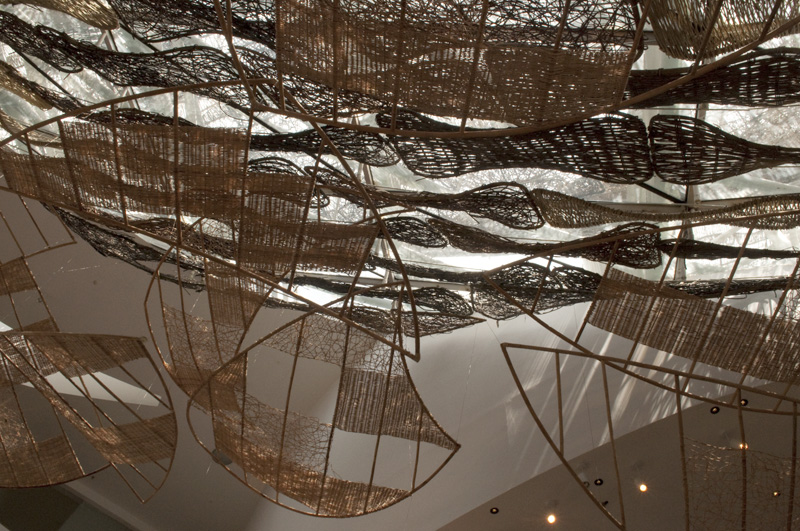
Personally, I wasn't that impressed by the World Expo. Although it's only fair to point out that my opinion was probably at least partially influenced by the fact that it was very hot and humid when we were there. Nonetheless, my parents & I wandered around looking at the architecture of the different pavilions which were each very unique in it's own way. I thought the European countries' pavilions were the most architecturally interesting. You can decide for yourself from the pictures below:
 China Pavilion

 Inside the Spanish restaurant in the Spain Pavilion

 Norway Pavilion
I think architecturally, Norway has the coolest structure.

Germany Pavilion

People-watching is always interesting

Ireland

 
The shade covers over the benches

  
Turkey Pavillion

For more information on the history of the World Expo/World's Faire/Universal Exhibiton: http://ilearn-culture.com/world-expo-introduction-and-history/

For more information about the World Expo 2010 at Shanghai: http://en.expo2010.cn/